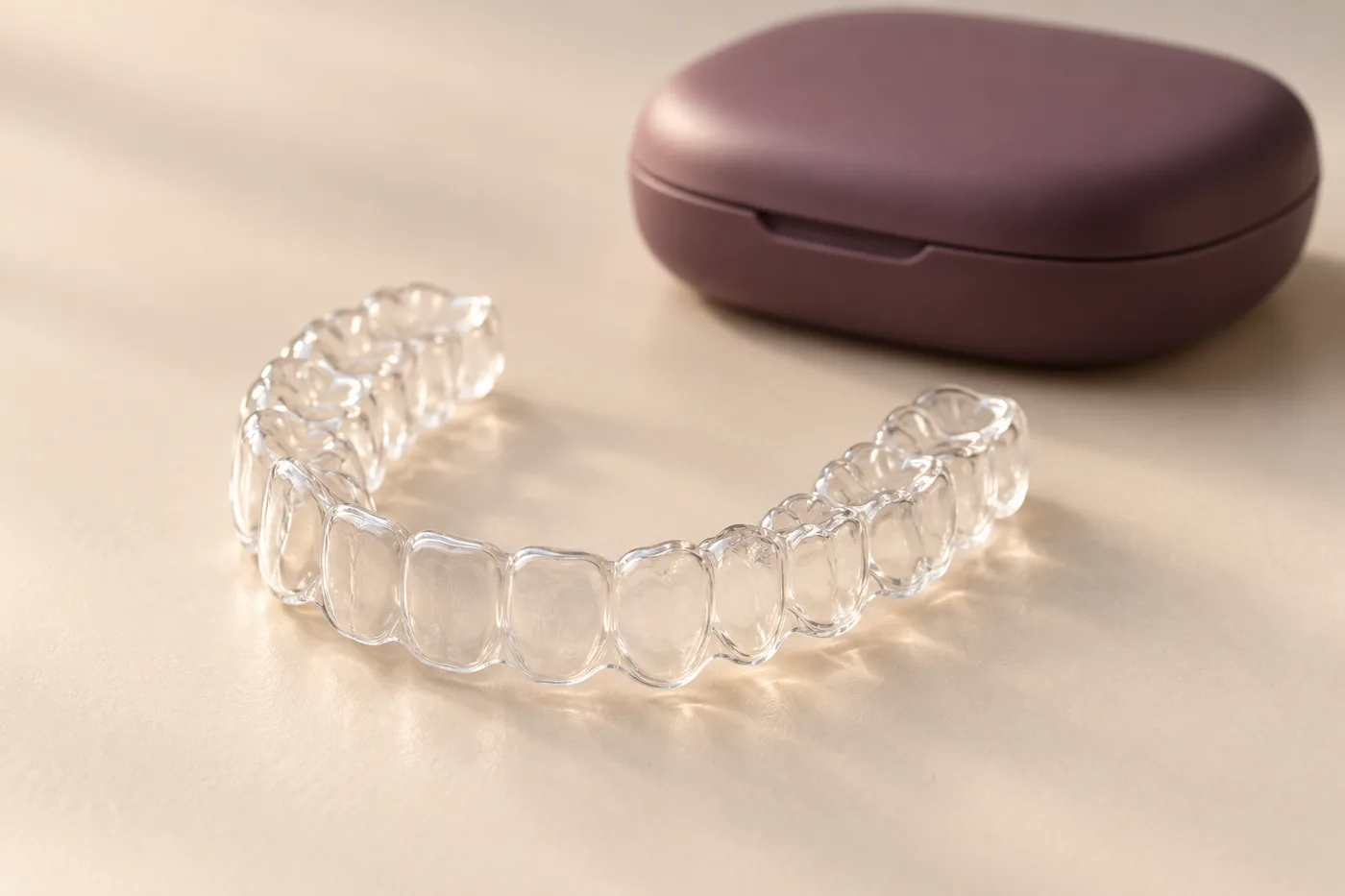
A brand and a treatment category
Different clear-aligner systems use their own materials, software and manufacturing processes. Invisalign is one system that a dentist may prescribe. A clear appearance alone does not tell you how a case was assessed or what movements the plan includes. Ask which system is being proposed and why the clinician considers it suitable for your teeth and treatment goals.
Clear aligners are not the same as clear retainers
A transparent appliance can serve different purposes. Active aligners are made in a planned sequence to move teeth. Clear retainers are generally made to hold a position after active treatment. They may look similar, but appearance is not a reliable way to determine how an appliance should be used. A tray bought or prescribed for another purpose should not be treated as an alternative aligner.
Keep the original packaging and instructions so you can identify the appliance and its role. If an old retainer is tight or no longer fits, do not force it into place as a do-it-yourself correction. Ask for assessment of the movement and the appropriate next step. The need may be a replacement retainer, new treatment, or another intervention based on the findings.
Supporting components may be part of either plan
A proposal described as clear-aligner treatment can include attachments, elastics or other supporting steps. The aligner brand alone does not tell you whether these will be needed. Ask the clinician to show you the components in your proposed plan and explain their roles. An advertisement featuring an empty transparent tray does not represent every patient’s experience. Knowing what you would actually wear helps you compare appearance and daily handling without mistaking additional components for an unexpected change in treatment.
Records and materials are different parts of care
A scan records the visible surfaces of your teeth; it is not the aligner itself and does not show everything beneath the gums. The clinician uses records to make decisions, while the manufacturing system turns an approved prescription into appliances. Keep these steps separate when comparing technology claims. Ask which records are required and why, rather than assuming a particular scanner establishes the quality of the diagnosis. A digital model still needs to be interpreted alongside an examination and other appropriate information.
Scope can vary within a system
Even treatments using the same brand may have different intended scopes, inclusions and time limits. A limited plan may address a specific alignment concern while leaving other bite features unchanged. A broader plan may involve more movements and follow-up. Ask the dentist to explain what is included and what is outside the plan, especially when comparing quotes with different prices.
Compare supervision as carefully as the appliance
Before accepting any clear-aligner treatment, establish who will examine you, who takes responsibility for the plan, and how you can contact that person’s team. Ask which records will be used and what happens if an examination identifies decay, gum concerns, or a bite issue outside the proposed scope. The answer should explain a process rather than simply promising convenient delivery.
If some monitoring is remote, ask what it is intended to assess and when an in-person visit is needed. A photograph cannot show every aspect of dental health. Local access may be especially important when an attachment breaks, a tray does not fit, or your situation changes. Evaluate these arrangements before treatment rather than waiting until you need help between scheduled reviews.
Use a product comparison to ask better questions
Write down the proposed treatment goals first, then compare records, supervision, supporting procedures, additional-aligner terms and retention. This order keeps a price or brand preference from obscuring a major difference in care. Ask what would happen if the initial series does not achieve the planned movements and whether a new assessment or fee would be needed.
At a complimentary consultation with Heritage Dental Centre or Bridgeview Dental, you can discuss Invisalign in Mission without assuming that every clear-aligner option is interchangeable. Bring any other proposal you are considering and identify the parts you do not understand. The purpose is to compare the actual services and clinical objectives, not to declare that a brand is always superior or that a lower-priced option must be unsuitable.
Think ahead if you may move practices
Changing address or dental practices during treatment can require more than sending a box of unused trays to a new provider. Ask how records would be supplied, what information a receiving clinician would need, and how fees already paid are handled under your agreement. The receiving clinician must decide whether to continue or revise the plan. Establishing the current practice’s process is useful even if a move is only possible, and avoids assuming that a shared aligner brand makes care automatically transferable.
Your questions, answered.
Are all clear aligners Invisalign?
No. Invisalign is a brand; clear aligners are a broader category that includes other systems.
Does a digital preview guarantee the result?
No. It illustrates a proposed plan. Actual movement depends on biological response, wear and clinical management.
What should I compare first?
Start with suitability, treatment goals and who is responsible for your care. Then compare the complete fee, follow-up and retention arrangements.
Sources & further reading
Invisalign versus braces ↗Invisalign FAQs ↗American Association of Orthodontists — Aligners ↗American Association of Orthodontists — retainers ↗Updated October 27, 2026. General education, not a diagnosis or personalized treatment instruction. Ask your treating dentist how the information applies to your care.